Posted in Faith and Hope, Love & Relationships

A Father’s Love

“Father of the fatherless and protector of widows is God in his holy habitation.”

–Psalm 68:5

Good parents discipline their children. Good parents also don’t base their love for their children off of their children’s obedience.

When secularists, especially in western culture, think of Christianity they fear that they will “have to follow a bunch of rules” in order to please God. However, they miss the point that God views us as His children and loves us. He gives us rules to live by to keep us from harming ourselves, much like how a human father will tell his children not to play on a busy street where they might be hit by a car. This is the difference between a conventional religion and a relationship with God.
The Oxford dictionary of English defines “religion” as “The belief in and worship of a superhuman controlling power, especially a personal God or gods” or ” A particular system of faith and worship.” In that sense Christianity is a religion, since we worship God. Practically speaking, however, Christianity differs drastically from any other religious belief system. God accepts us even when we don’t obey Him; He loves those who even actively hate Him. The unconditional fatherly love of God is evident in Romans 5:8, “but God shows his love for us in that while we were still sinners, Christ died for us.” Even many Christians miss this point, truth be told. That’s why some act out of anger and wrath rather than kindness.

“Christianity is not about signing up for a religion. Christianity is about being born into the family of God (John 3:3). It is a relationship. Just as an adopted child has no power to create an adoption, we have no power to join the family of God by our own efforts. We can only accept His invitation to know Him as Father through adoption (Ephesians 1:5; Romans 8:15). When we join His family through faith in the death and resurrection of Jesus, the Holy Spirit comes to live inside our hearts (1 Corinthians 6:19; Luke 11:13; 2 Corinthians 1:21–22). He then empowers us to live like children of the King. He does not ask us to try to attain holiness by our own strength, as religion does. He asks that our old self be crucified with Him so that His power can live through us (Galatians 2:20; Romans 6:6). God wants us to know Him, to draw near to Him, to pray to Him, and love Him above everything.” [1]

As God’s adopted children, Christians are expected to follow the rules which He set for our own benefit. He will be faithful to help us follow these rules. But for the times we fail, God still offers His forgiveness and love as our father.
Maybe you never had a loving father and don’t really understand what they’re like. God offers Himself as an adoptive father to the fatherless. A person is not born a Christian: they must accept God’s gift of adoption through Jesus Christ. Simply declaring your faith and dedicating your life to Him will bring you into relationship with God, which is what He desires.

“…You did not receive the spirit of slavery to fall back into fear, but you have received the Spirit of adoption as sons, by whom we cry, ‘Abba! Father!'” –Romans 8:15


Sources:
[1] GotQuestions.org. “Is Christianity a Religion or a Relationship?” GotQuestions.org, 21 Feb. 2018, http://www.gotquestions.org/Christianity-religion-relationship.html.

Posted in Faith and Hope, Social Issues

Being Teachable

“Whoever loves discipline loves knowledge,
    but he who hates reproof is stupid.”

–Proverbs 12:1


Being teachincable is a vital quality every person should have — yet it’s so rare.  Both pride and low self-esteem make us resistant to instructions and offended at critism, even the constructive kind.  I myself struggle with this, and when I do it hinders my growth.

When we refuse to listen to any kind of feedback or critisim we cheat ourselves.  Knowing who we are in Christ will make us wise and humble, and when we’re wise and humble we’ll become more teachable.


The Bible teaches us that since we are loved, valued and forgiven, we don’t need to fear our short commings since our faliures don’t affect God’s love for us.  So when someone points out something wrong in our life we can know that doesn’t determin our value.

We also should be open to being teachable since only God knows everything and we know comparitively nothing.  It’s hard when our longest-held or most fundimental belifes are challenged, but we must remain open to correction and growth.


Psalms 147:4-5

He determines the number of the stars;
    he gives to all of them their names.
 Great is our Lord, and abundant in power;
    his understanding is beyond measure.


We must, above all, be open to what we read in the Bible.  To not be open to what God has given us in the Bible will lead us down a dangerous road.

Being open to correction will not only help us grow closer to God, but will also help us have healthy relationships with others.  May The Holy Spirit help us to have teachable hearts.


“Who has measured the Spirit of the Lord,
    or what man shows him his counsel?
Whom did he consult,
    and who made him understand?
Who taught him the path of justice,
    and taught him knowledge,
    and showed him the way of understanding?”

–Isaiah 40:13-14

Posted in Faith and Hope

Dedication & Celebration

I found an old journal which is very meaningful to me:


13/02/2016 19:09

Pacific Daylight Time


I want to remember this night I publicly rededicated my life to the Lord.  It was seriously awesome.


If I could be granted one wish, it would be to love the Lord with perfect love and to have a humble and submitted heart towards Him.

He’s kept me alive.

He’s my best friend.

I’m so in love, I can’t find the words to express it…


It’s been a few months since I last wrote a blog post.  We’ve been very busy traveling and adjusting to life in another hemisphere.  I’m full of joy to be with my family again, but I’ve been badly missing having quiet time to write out my thoughts and meditate on scripture.  Thankfully, so far my husband is thriving amidst this newest transition and I’m very impressed with him.

We look forward to celebrating our marriage with my friends and family who couldn’t make it to our wedding in Asia.  I’ve grown more and more deeply in love with Amith, and I am thankful to God for putting him in my life.  He’s one of the main people who has helped me through all the tough transitions I’ve been through these past few years.

Many couples like to have a “renewal of vows” after they’ve been married a while.  The thing is though, wedding vows never expire, so there’s no need to renew them.  What Amith and I are doing is simply celebrating our love and life together, as well as all that God has done for us.  It reminds me of that day in 2016 when I rededicated my life to Christ by choosing to be baptized again.  I’ve already been baptized and I’m saved by His grace, but I was thankful to have the opportunity to publicly declare once again that I have no regrets about serving Jesus.

I’m thankful to God for creating marriage and showing us this picture of His love.  I’m thankful that God’s always dedicated to us, especially through difficult changes in our lives.  Maybe I’m not always as dedicated in my heart as I should be to the Lord, but 2 Timothy 2:13 tells us,

“if we are faithless, he remains faithful—

for he cannot deny himself.”

I have many deep feelings to work through and come to terms with stemming from these travel and life changes, but I’m thankful to God for giving me strength, and for giving me my wonderful husband and family to help me through this time.   I’m thankful to Him for never forsaking me, even when I find myself feeling depressed or distracted.

That is definitely something to celebrate!


Deuteronomy 31:6

Be strong and courageous. Do not fear or be in dread of them, for it is the LORD your God who goes with you. He will not leave you or forsake you.”

Posted in Faith and Hope

Maturing in Love With God

I Corinthians 13:1-8 ESV
“If I speak in the tongues of men and of angels, but have not love, I am a noisy gong or a clanging cymbal. And if I have prophetic powers, and understand all mysteries and all knowledge, and if I have all faith, so as to remove mountains, but have not love, I am nothing. If I give away all I have, and if I deliver up my body to be burned, but have not love, I gain nothing.
Love is patient and kind; love does not envy or boast; it is not arrogant or rude. It does not insist on its own way; it is not irritable or resentful; it does not rejoice at wrongdoing, but rejoices with the truth. Love bears all things, believes all things, hopes all things, endures all things. Love never ends.”

(note: the NLT says “if I don’t love others” but that narrows down the meaning of the original Greek.)


In the past when I read this passage, I had always thought about how this describes how I ought to love other people. I saw it as a good way to evaluate and choose my responses to others. Later, as I thought about how “God is love,” I realized it also describes God’s attitudes and actions towards me and all mankind. It helped me understand what God is like.
Most recently, however, I realized that since the most important command is “Love the Lord your God with all your heart, all your soul, all your mind and all your strength,” (Luke 10:27) that this passage describes how my attitude and behavior should be towards God.


I may demonstrate spiritual gifts, be able to speak truth that impacts others for Christ, and live sacrificially, yet my heart and motives be for another reason besides out of love for God. Perhaps I am trying to earn His love. Perhaps I am trying to prove to myself or to others that I am a good Christian. Perhaps I want to accomplish God’s work in my own strength and am not really humbly dependent on Him. Perhaps I am seeking a sense of belonging, identity or value among other Christians by doing these things. There may be many reasons, none of them due to love for God that overflows into these actions.
There’s an example in Revelation where they worked hard, endured persecution, held to sound doctrine, but not out of love for Jesus. The Scripture doesn’t say what their motive(s) were, but it’s clear that God looks on the heart and it matters to Him;
“To the angel of the church in Ephesus write: ‘The words of him who holds the seven stars in his right hand, who walks among the seven golden lampstands.
“‘I know your works, your toil and your patient endurance, and how you cannot bear with those who are evil, but have tested those who call themselves apostles and are not, and found them to be false. I know you are enduring patiently and bearing up for my name’s sake, and you have not grown weary. But I have this against you, that you have abandoned the love you had at first.” (Revelation 2:2-4)


When God says to love Him with all that we are, the question would be, what does it look like when one is loving God? What will flow out of our heart, our attitudes and behaviors when we are acting out of love of God? These verses tell us some of that. You can go through each characteristic and think of ways in which we sometimes fail or succeed in loving God in that way.
Also, very important to remember, we cannot love God in this way by our own ability. God is love, therefore He is the source of love that we have for Him and others. So we need to ask God to fill us increasingly with His own perfect love so that we can love Him as He deserves to be loved. As His Holy Spirit transforms us, we are increasingly able to love Him with all our heart, mind, soul and strength. Here are examples:


Love is patient.
When God is at work in me, in others, in relationships and situations, do I wait patiently for Him? Do I say, “Father, waiting is hard for me, but I trust You and I want You to do this in Your own time.” Abraham and Sarah got impatient with God’s timing, so they decided to fulfill God’s plan themselves with Hagar, and it lead to much pain.


Love is kind.
Am I considerate of God? Do I do the things that delight Him, such as enjoying Him, who He is and what He does, speaking well of Him before others, spending time with Him in prayer, offering my availability to be used by Him each day?


Love does not envy.
Do I have a bad attitude towards God because He’s given others something that I want, perhaps a good job, a spouse, a spiritual gift that He did not give me, opportunities, etc? It is love to be content, rather than to envy. To be content with the small, unnoticed ministry that He has given me, or the spiritual gift that seems very common-place or the job that’s hard to be at or a less-than-perfect family. To look at the blessings He has given me and be grateful.


Love does not boast.
Do I try to fix things myself when God wants me to depend on Him? When God points out a sin or failure in my life, do I resist admitting to it, or do I humbly agree with Him (confess my sin), repent and ask Him to purify me? Do I do things with a subtle desire to be noticed and praised, instead of helping people direct their thoughts to God’s glory (i.e. do I try to steal God’s glory)?


Love is not arrogant.
Arrogant definition is – exaggerating or disposed to exaggerate one’s own worth or importance often by an overbearing manner. When I am arrogant with God, I treat Him like my servant. I make my plans and tell Him to bless them, rather than seeking His will for my overall life and for each situation. When I am arrogant with God, I tell Him that He must heal this person because I am praying in faith, or that He must fulfill His Scriptural promise to me in a certain way and certain timing. When I am arrogant with God, I assume He owes me something. When I love God, I realize that He owes me nothing, and I owe Him everything. When I love God, I remember that everything He gives me is an undeserved gift. I listen, and ask, and thank, but I do not tell Him what to do.


Love is not rude.
When I love God, I sit quietly in His presence and listen to all He has to say through prayer or Scripture instead of doing all the talking myself. When I love God, I let Him go first, and I follow Him throughout my life. When I love God, I don’t use His Name as a common exclamation or cuss word, but I always speak His Name (God, Lord, Jesus, Father etc) with respect. I am honest with God, and I express my feelings to Him, but I always remember that He is the Great and Holy King, He has paid the price to buy me from death, so loving Him means being polite towards Him. Jesus taught us politeness in addressing God with respect, “Our Father in heaven, holy is Your Name…”


Love does not insist on its own way.
When it comes to our relationship with God, what is it called when we insist on our own way? Sin! Eve loved herself more than God (so she wanted to be as good as God in her knowledge of good and evil), so she insisted on her own way in eating the fruit. Adam loved Eve more than God, so he insisted on his own way in joining her rather than obeying God. When I love God, I choose not to sin. Sin is failure to love God more than my own desires. Jesus loved His Father in the garden when He expressed His feelings and desire to not have to suffer, but then said, “Not my will, but Yours be done.”


Love is not irritable or resentful.
Resentful is an attitude of ingratitude, and irritable is how you act this out (when the irritability isn’t physiologically caused, like PMS, low blood sugar, over-tired or anxiety/depression). They are not feelings, but a state of being. Jonah is an example of one who failed to love God, and to love what God loves:
“When God saw what they (Ninevah) did, how they turned from their evil way, God relented of the disaster that he had said he would do to them, and he did not do it. But it displeased Jonah exceedingly, and he was angry. And he prayed to the Lord and said, ‘O Lord, is not this what I said when I was yet in my country? That is why I made haste to flee to Tarshish; for I knew that you are a gracious God and merciful, slow to anger and abounding in steadfast love, and relenting from disaster. Therefore now, O Lord, please take my life from me, for it is better for me to die than to live.’ And the Lord said, ‘Do you do well to be angry?… And should not I pity Nineveh, that great city, in which there are more than 120,000 persons who do not know their right hand from their left, and also much cattle?'” (Jonah 3:10-4:1-4, 4:11)


Love does not rejoice in wrongdoing, but rejoices in the truth.
“When Peter came to Antioch, I told him face to face that he was wrong. He used to eat with Gentile followers of the Lord, until James sent some Jewish followers. Peter was afraid of the Jews and soon stopped eating with Gentiles. He and the other Jews hid their true feelings so well that even Barnabas was fooled. But when I saw that they were not really obeying the truth that is in the good news, I corrected Peter in front of everyone.” —Galatians 2: 11
When Paul corrected Peter, was Peter glad that the truth was brought out? It would have been very embarrassing and difficult for Peter, but if he loved God and wanted God’s ways to prevail, he would have been glad to be corrected (might have taken a while for his feelings to get there, though!)
When someone has mistreated me, am I glad when I see them get mistreated? Or do I rejoice and praise God when I see them receive forgiveness and blessing from Him? I am loving God when I rejoice to see His work being done as the light of His truth shines on me and others.


Love bears all things, believes all things, hopes all things, endures all things. Love never ends.
When my circumstances are confusing, painful, overwhelming, hopeless, love focuses me on God and who He is. I accept from His hand what He allows, believing His promises, hoping instead of despairing, enduring what He has called me to for His glory.
Hebrews 12:1-2, “Therefore, since we are surrounded by so great a cloud of witnesses, let us also lay aside every weight, and sin which clings so closely, and let us run with endurance the race that is set before us, looking to Jesus, the founder and perfecter of our faith, who for the joy that was set before him endured the cross, despising the shame, and is seated at the right hand of the throne of God.”


When we stand before Him, we will be perfect in love for Jesus has promised to complete His good work in us and we will love Him for all eternity.


Philippians 1:6
“being confident of this, that he who began a good work in you will carry it on to completion until the day of Christ Jesus.”


Posted in Faith and Hope

Understanding God’s Grace: Is It A License to Sin?

Ephesians 8-9
“For by grace you have been saved through faith. And this is not your own doing; it is the gift of God, not a result of works, so that no one may boast.”


We see that we have not earned God’s favor, but that He has graciously accepted us and sees us as His children. This is good news for us, since we all make mistakes and sin at times. It’s also good news that it’s never to late for us to repent and turn to Christ.

A non-Christian friend once said to me bitterly, “I could never worship a God who would allow both a murderer and an innocent person into heaven.”
This is a common criticism of Christianity. It doesn’t seem fair that, since we’re saved by the grace of God, hypothetically we could live sinfully, hurt others and be yet still forgiven by God.

There are some critical points which are missed when making this argument, however.
If someone purposefully does something bad to you, figuring that they can say “sorry” and get out of trouble, would you believe their repentance is sincere? No. Likewise a person who knowingly and purposefully lives in sin, figuring “Ah, God will forgive me,” it not truly repenting and does not have a sincere relationship God. Once someone becomes a Christian they’ll start to lose the desire to sin. A person who comes to Christ is no longer under the power of sin.

Romans 6:15-19
What then? Are we to sin because we are not under law but under grace? By no means! Do you not know that if you present yourselves to anyone as obedient slaves, you are slaves of the one whom you obey, either of sin, which leads to death, or of obedience, which leads to righteousness? But thanks be to God, that you who were once slaves of sin have become obedient from the heart to the standard of teaching to which you were committed, and, having been set free from sin, have become slaves of righteousness. I am speaking in human terms, because of your natural limitations. For just as you once presented your members as slaves to impurity and to lawlessness leading to more lawlessness, so now present your members as slaves to righteousness leading to sanctification

The person who sincerely knows and loves God will not be controlled by sin, and they won’t be continuously living a sinful lifestyle. God will give us the opportunity and strength to avoid sinning. Because of our flawed human nature, we’ll still mess up and sin at times, but God will always forgive His children.

Why do Christian still sin, then?
That’s because of the world we live in. We are often told lies and are deceived. Sometimes the enemy purposefully deceives us, and sometimes well-meaning people lead us astray. In moments of stupidity we ignore God and follow our impulses, or the foolish things which we have learned from others. The more time we spend in sincere prayer and study of the Bible, the more we’ll understand our flawed mindsets and behaviors.

As Jesus said, “You will know the truth, and the truth will set you free.” (John 8:32)


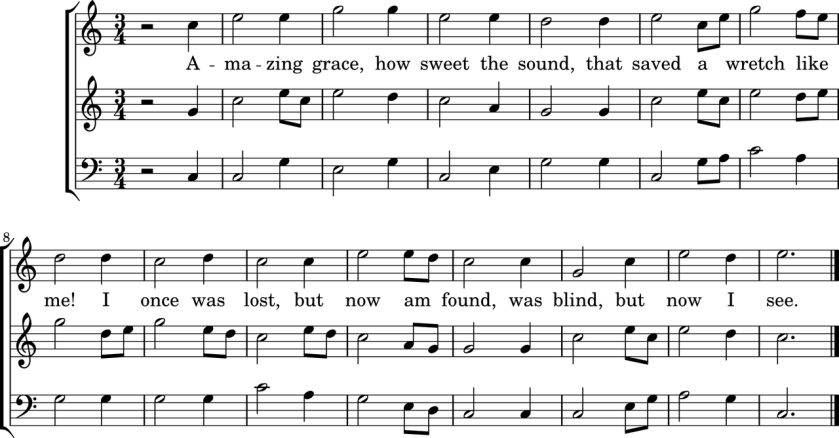
amazing-grace-875860_1280

Posted in Faith and Hope

“This Day You Will be With Me in Paradise”

Luke 23:32, 39-43
Two others, who were criminals, were led away to be put to death with him…
One of the criminals who were hanged railed at him, saying, “Are you not the Christ? Save yourself and us!”  But the other rebuked him, saying, “Do you not fear God, since you are under the same sentence of condemnation?  And we indeed justly, for we are receiving the due reward of our deeds; but this man has done nothing wrong.” And he said, “Jesus, remember me when you come into your kingdom.” And he said to him, “Truly, I say to you, today you will be with me in paradise.”
There is absolutely nothing we can do to earn salvation.  The thief on the cross next to Jesus certainly did nothing.
 
We don’t know how long the man on the cross next to Jesus had been into crime, but it was presumably for a long time.  He was living in sin and had not been baptized, and he realized who Jesus was only right before death.  Yet he had a humble and repentant heart and confessed that Jesus is Lord.   He said the words, “When You enter Your Kingdom, Lord, remember me,” Jesus answered, “Truly, I say to you, this day you will be with me in paradise.
 
That’s how we know that the thief is in heaven.  All that is needed for salvation is what Romans 10:9 says, “if you confess with your mouth that Jesus is Lord and believe in your heart that God raised him from the dead, you will be saved.”
 
God brings us into  the fullness of relationship with Him, position in Him and inheritance of all God has given us on “this day” that we accept Christ.  We are not waiting to claim these things, we have them already.  We are not trying to earn them (just as the thief on the cross did not earn them); we are given of their fullness in a single moment of giving our lives to Christ.  It is simply that we have not seen the fulfillment of all of it yet.  We have seen the fulfillment of part of it,  and we are growing into the fulfillment of another part of it (as we are transformed increasingly to be like Christ),  and we will see the complete fulfillment when we enter His presence face to face.
 
This is why we live by faith.  We know this is who we are and what we have, and we are living in terms of it (people of righteousness, children of God with a great and everlasting inheritance), but it will be just a bit longer until we fully experience all of the reality.  It’s like being engaged.  You are not yet married, but you live in the reality of your marriage.  You no longer date others, you no longer invest in your single-person lifestyle, all your thoughts and actions become in line with what your life will be as a married person.  Your fiancé belongs to you, and you are living in faith that you  will have that wedding.  Finally, the wedding day comes, and all the faithfulness, and changes and building on relationship that you did as an engaged person comes to fruit.  You are presented as a pure, free and beloved bride.
 
That’s us!  We already have Paradise in our souls.  We entered Paradise on the day we received Jesus.  Now, let us feel secure in His love and His relationship to us, let us live as faithful fiancés, knowing that the wedding day is almost here!
Posted in Faith and Hope

Psalms of Wrath

A few weeks ago in church we were reading Psalm 109, which is full of “delightful, lighthearted poetry” such as,
“When he is tried, let him come forth guilty;
    let his prayer be counted as sin!
May his days be few;
    may another take his office!
May his children be fatherless
    and his wife a widow!
May his children wander about and beg,
    seeking food far from the ruins they inhabit!” (Vs. 7-10)
This passage made me squirm in my chair.  Yes, apparently the man David was calling this curse down upon was a terribly evil person.  But isn’t this vengeful prayer really a merely human response?  What about Jesus command in Matthew 5:43-48 to pray for your enemies and show them kindness?
The prayers for wrath in the Book of Psalms are called the Imprecatory Psalms, and they include Psalms 5, 10, 17, 35, 58, 59, 69, 70, 79, 83, 109, 129, 137 and 140.  “Imprecate” means “to pray evil against” or “to invoke curse upon” someone.  What can we as Christians learn from these vengeful prayers?

   1. David called for God’s vengeance.

As king of Israel, David lead his army against the enemy to destroy them.  But when it came to his personal enemies, rather than taking revenge himself, David called on God to do it, leaving it in God’s hands.  This is in obedience to what God said in Deuteronomy 32:35-36 ,
“Vengeance is mine, and recompense,
    for the time when their foot shall slip;
for the day of their calamity is at hand,
    and their doom comes swiftly.’
For the Lord will vindicate his people
    and have compassion on his servants”
Basically, David is calling on God to fulfill His promise.

   2. Vengeance belongs to the Lord.

Psalm 40:14
“Let those be ashamed and humiliated together who seek my life to destroy it. Let those be turned back and dishonored who delight in my hurt.”
Psalm 71:13
“Let those who are adversaries of my soul be ashamed and consumed. Let them be covered with reproach and dishonor, who seek to injure me.”
In these prayers David does not go out and attack his personal enemies   He simply leaves them to the wrath of God.
Paul repeats this idea to believers, quoting the verse in Romans 12:19, “Do not take revenge, my dear friends, but leave room for God’s wrath, for it is written: “It is mine to avenge; I will repay,” says the Lord.”  Notice that it is not saying that there will be no wrath against those who attack God’s people.  You see, we (God’s people) have been given the righteousness of Christ, and so when we are attacked, the righteousness of Christ is attacked.  But this is why it is Christ who will bring judgment and justice when He returns, because it is His righteousness that the enemies of God have attacked, not our own.  We are in Christ, and the Holy Spirit is in us, so when we are attacked, Christ is attacked.  (I’m not talking negative consequences for our actions, but true persecution.)
Here is another verse that shows that this idea of believers calling on God for justice carries to the end of the ages:
Revelation 6:9-11
“When he opened the fifth seal, I saw under the altar the souls of those who had been slain for the word of God and for the witness they had borne.  They cried out with a loud voice, “O Sovereign Lord, holy and true, how long before you will judge and avenge our blood on those who dwell on the earth?” Then they were each given a white robe and told to rest a little longer, until the number of their fellow servants and their brothers should be complete, who were to be killed as they themselves had been.”

3. In the Old Testament, under the Law, justice meant fair punishment for the sin or crime.

For there not to have been vengeance would have meant injustice.  But to New Testament believers, who were condemned under the law, but forgiven and justified through Jesus, we are called to pray for our enemies, condemned under the Law as we once were, that they may come to know that same forgiveness and justification that we were given by grace.  David didn’t know about Jesus or the sacrifice Jesus would make.  We do now know this, and it gives us greater responsibility to be like Christ in forgiving our enemies, just as He forgave us while we were still His enemies.  That is the “love your enemies” verse, that we should love them in the sense of praying for their salvation and telling them about Christ if they will listen.
Jesus brought in a new covenant with His people, (1 Corinthians 11:25 “In the same way, after supper he took the cup, saying, “This cup is the new covenant in my blood; do this, whenever you drink it, in remembrance of me.”) In which He offered payment for sins so that now God’s holiness is expressed through bringing people into the righteousness and mercy of Christ.  For this reason, instead of praying for punishment of those who offend us, we first forgive as God has forgiven us, and we pray that God will bring His forgiveness and righteousness into their life.
Matthew 5:20
“For I tell you, unless your righteousness exceeds that of the scribes and Pharisees, you will never enter the kingdom of heaven.”
The scribes and Pharisees were known for following the law with behavioral exactness; Jesus calls on His people to exceed this by having hearts  internally transformed to be like the Father
Matthew 5:44-45
“But I say to you, Love your enemies and pray for those who persecute you, so that you may be sons of your Father who is in heaven.  For He makes His sun rise on the evil and on the good, and sends rain on the just and on the unjust.”

4. God wants us to hate the enemies of our souls.

God’s people sin when they fail to hate what God hates, like spiritual adultery, lies, pride etc.  The New Testament says we battle not against flesh and blood, but against principalities (the kingdom of Satan and the world).  God wants us to have the passionate hatred for sin and evil, and all that promotes evil.  He wants us to absolutely not tolerate it in our lives, but to resist the devil, and to get rid of the evil things.  Have imprecatory attitudes towards all that threatens our well-being by leading us away from God.  It is a godly thing to hate evil and injustice and to pray against it.   Sometimes we get so used to seeing evil that we become complacent with it.  We should continue to abhor the things that God hates.  The imprecatory psalms remind us that prayer is a powerful weapon against evil, both externally and the evil we find within ourselves.
Furthermore, let’s look again at Psalm 109:9-10,
“May his children be fatherless
    and his wife a widow!
May his children wander about and beg,
    seeking food far from the ruins they inhabit!”
David is saying may this evil man die young, which would leave his children as orphan and his wife as a widow. This would leave them as beggars, as a consequence of the outcome of the guy’s evil choices, not as a direct curse on them.  Sin doesn’t affect just the sinner; it has consequences for the innocent too.  This is another reason we must not take sin lightly.  On the contrary, we should hate evil and be disgusted by it.

The question may arise, “Should we as Christians today ever pray the Imprecatory Psalms?”

Today as always there exist malicious, militant groups such as ISIS who are every bit as evil as the enemies of David.  Should we, like David, pray God’s wrath upon evil regimes?
The church’s mission is to feed the worldwide flock of Christians, not hope for the downfall of non-believers.  Actively torturing and calling for the downfall of “infidel” is exactly what ISIS does and what makes them so diabolical.  We as Christian are not called to such degeneracy, nor are we even to harbor the desire of violence.  We are to hate evil with a passion, but we are to show kindness and love to non-believers and pray for their salvation.
We must note that David was a king; a ruler of a nation.  The imprecatory psalms were not directed merely at David’s personal enemies, but at evil regimes who were actively committing heinous crimes and attacks against nations.

Psalm 59:5

“You, Lord God of hosts, are God of Israel.

Rouse yourself to punish all the nations;

spare none of those who treacherously plot evil.”

In short, we are not to pray God’s wrath upon our obnoxious neighbors who anger and annoy us.  And we are not to pray God’s wrath upon those who differ in their doctrine from us.  Since Jesus has opened up the doors of salvation, the best thing we can do is to pray for the salvation of our fellow human beings.  We’re to pray God’s wrath upon the enemies of our souls; evil itself which we find in the world. My conclusion is that believers bring their honest feelings and thoughts to the Lord, and pray for the righteousness of His kingdom to come upon this earth, but for those who hurt them personally, believers are not to pray imprecatory prayers, but to pray that God will save and/or sanctify them, giving them mercy and grace, just as He has given to the believer.  This, of course, can only be done by the power of the Holy Spirit, and is part of the tools that He uses to make us like our Father in heaven.
Posted in Faith and Hope

Fledgling

Are not two sparrows sold for a penny? And not one of them will fall to the ground apart from your Father.  But even the hairs of your head are all numbered. Fear not, therefore; you are of more value than many sparrows.

–Matthew 10:29-31

9 April, 2017

I was in a deep sleep taking a nap, when my phone rang,
“Honey!  Come here!  I found a baby sparrow!”

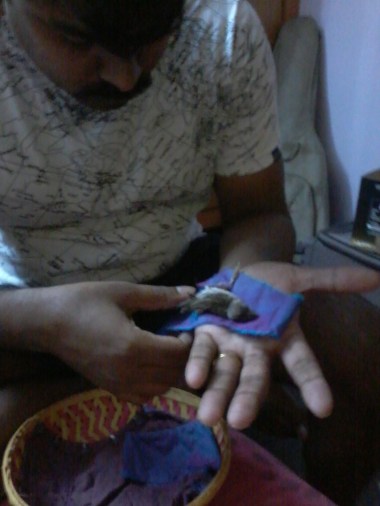
So I went down to the parking lot, and Amith was holding the little guy (or girl.  We’re still not sure which gender it was).  Amith couldn’t find the nest, but we saw the mother fluttering around.  So we set the baby down and waited at a distance for 20 minutes or so to see if the mom would come to her offspring’s rescue.  But sadly, she didn’t.

IMG-20170509-WA0006

There were cats, cars and carnivorous birds around, so we debated what to do.
“Shall we take it?” Amith asked.
“How could we feed it?” I asked.
“Well, defiantly no one will feed it if we leave it here.”
“Where would we put it?”
Amith smiled and said, “We have a little pot…!”

And that’s how we ended up with the bird.  Seeing how Amith cared for the bird made me see that he’s going to be a very kind and loving father someday.

…You know, I even caught him making kissey faces at the bird!

20170512_112012
The bird was fragile; it had a broken leg and I was scared of hurting it, but Amith showed me that I could hold it without harm.  As neither of us are really experienced with animals of any sort, I researched online what to do if you pick up a baby sparrow and what to feed it.  We found that it’s pretty tough to keep them alive!  It got hungry every 45 minutes and as we didn’t have access to pet food we did our best to feed it tiny bits of boiled egg.  However, grapes were its very favorite.  And thankfully, baby birds will sleep through the night if they’re not nocturnal, so we could get some rest.

Usually a groundling dies after 24 hours, and ours only lived for 4 days after we found it.  On the fourth day it became sickly and in its final hours Amith very kindly cared for it so that I wouldn’t have to watch it die.

20170511_152834

There are several reasons why a baby bird may fall out of its nest.  One common reason is that it tried to fly too soon.  It’s possible this was the case with ours as it had some pinions, but it was still very downy and weak.

How often do we do the same in our life?  How often do we ignore the fact that God’s time frame and plans for our life are different than ours and jump ahead into something we’re not ready for?

 But they who wait for the Lord shall renew their strength;

    they shall mount up with wings like eagles;

they shall run and not be weary;

    they shall walk and not faint.

–Isaiah 40:31

I’m thankful my husband waited for God’s will for who he should marry even when he was lonely.  I’m glad I too waited on God’s timing to marry Amith, although temptations came my way.  I can’t imagine being married to anyone else.

As we wait upon the Lord we may experience anxiety of an unknown future.  Where will I find a job?  Who will I marry?  How will my children turn out?  Those who act out of fear and those who rush impatiently into a decision will suffer, sometimes for their whole life.  But just as God sees even the smallest animal and their needs, so He sees us.  And we are of infinite more value.

Even if this bird launched from its nest too early, God placed my husband in just the right spot at just the right time so we could keep it safe.  If it had stayed in its nest and grown into adulthood it would have been better, but still God provided for it and gave us joy in caring for it.  How much more will he provide for us even if we stumble.

Posted in Faith and Hope

A Call To Prayer For Deadly Sin

If anyone sees his brother committing a sin not leading to death, he shall ask, and Godwill give him life—to those who commit sins that do not lead to death. There is sin that leads to death; I do not say that one should pray for that. All wrongdoing is sin, but there is sin that does not lead to death.

–1 John 5:16-17

We know that, “the wages of sin is death,” so why is John sounding like some sins leads to death rather than others?  My belief is that the sin which leads to death spoken of in this passage is the rejection of Christ.

For he who sanctifies and those who are sanctified all have one source. That is why he is not ashamed to call them brothers, saying,

“I will tell of your name to my brothers;
    in the midst of the congregation I will sing your praise.”

–Hebrews 2:11-12

If someone is “a brother” (or sister as the case may be) then they have already accepted Jesus as their savior.  When a brother or sister in Christ stumbles in sin, they will be forgiven.  The only way their sins won’t be forgiven is if they reject Jesus as their savior.

The word, “life” in the Bible can refer to righteous living.  As Christians it’s part of our duty to pray for our siblings in Christ to walk in accordance with God’s will.

Tragedy struck at the end of this spring when a friend of mine committed suicide.  Our community was devastated, but our comfort was that he knew the Lord and was saved.  This is the peace in knowing that God forgives the sin of all those who are in relationship with Him.  And all means ALL; even the sin of suicide.

Those, however, who are not in a relationship with Christ are not our brothers and sisters. That’s why rejecting Christ and blaspheming the Holy Spirit is the only real sin which leads to death.

A Christian can’t “accidentally loose their salvation,” for a real blasphemy or rejection requires a conscious decision.
I also dare believe that even if a person has previously committed the sin which leads to death they will always have the chance for repentance as long as they live in this world. God’s will is that none should perish.

It won’t do much good to pray that God will give spiritual life to those who have rejected Him, because only the Holy Spirit can change hearts.  A person’s attitude and behavior won’t really change for the better unless they allow the Holy Spirit to help them.  That’s why John says, “I do not say that one should pray for that.”

But please note he doesn’t say, “Don’t pray for them at all.” Still as we feel called we may pray that those we know who are unsaved would become our brothers and sisters in Christ.

Posted in Faith and Hope

Rejoice in The Lord

Lent is supposed to be a solemn time of repentance and turning to God.  But I believe that from the most profound of solemnities springs the deepest of joys.  There is no greater joy than walking in relationship with God, and something which will draw us closer to Him is sacrificing our fleshly nature and denying ourselves for His glory.

There was a man known as Brother Lawrence who lived in France in the mid 1600’s. He was not educated, nor was he particularly clever or talented. Most of his life he worked in the kitchen of a monastery. So why is his name remembered today? It’s because although he lived a simple life he did all his menial tasks faithfully, for the glory of God.

Worldly ministers sees glory as having a big ministry, and doing great things for God. Heaven sees glory as faithfulness to God in the tasks He has given you, even if you’re just a kitchen boy like Brother Lawrence.

For years I wanted to live overseas and do great things. I come from a small town and I just felt so trapped and bored. Then I finally moved overseas and…became a housewife. I became excruciatingly bored as I had expected to become some sort of Mother Teresa.  It was through this boring, monotonous time that I began to learn more about God, and in so doing, I learned more about myself.

I kept saying to my husband, “I feel like I’m useless!”

All he would say is, “No, it’s ok.”

Maybe my husband and my family could live without me, but they don’t want to.  I didn’t understand why, but it dawned on me that it’s because they love me for who I am, not for what I’m capable of doing.

And oh, how focused I can be on doing.

I must ask myself sometimes, “Why am I worshiping and reading the Bible?  Why am I writing and blogging?  Is it to give myself a sense of worth and significance?  Is it to feed my ego and fickle emotions?  Or is it a way to connect to God, like writing a love letter?”

When I want something, I try to get it done and make it happen myself.  But it’s absurd to think I could have control over everything which happens in life. Then, my unfulfilled desires turn into fear, my fear turns into worry and worry turns into depression.

When I’m afraid, my prayer can become a form of worrying.  I focus on my issue and forget who God is.  I pray,

“God please, please provide for us!”

“God PLEASE don’t let this bad thing happen!”

That’s me focusing on the problem rather than on The Problem Solver.  But when my focus shifts onto The Problem Solver, my worry turns into worship and my fear turns into praise;  and my own desires conform to God’s desires.  God can and will make His desires happen, so once you understand His heart and allow your desires to become His, you will find boundless joy in Him.

Psalm 34

Taste and See That the Lord Is Good

Of David, when he changed his behavior before Abimelech, so that he drove him out, and he went away.

I will bless the Lord at all times;
    his praise shall continually be in my mouth.
 My soul makes its boast in the Lord;
    let the humble hear and be glad.
 Oh, magnify the Lord with me,
    and let us exalt his name together!

 I sought the Lord, and he answered me
    and delivered me from all my fears.
 Those who look to him are radiant,
    and their faces shall never be ashamed.
 This poor man cried, and the Lord heard him
    and saved him out of all his troubles.
 The angel of the Lord encamps
    around those who fear him, and delivers them.

 Oh, taste and see that the Lord is good!
    Blessed is the man who takes refuge in him!
 Oh, fear the Lord, you his saints,
    for those who fear him have no lack!
 The young lions suffer want and hunger;
    but those who seek the Lord lack no good thing.

 Come, O children, listen to me;
    I will teach you the fear of the Lord.
 What man is there who desires life
    and loves many days, that he may see good?
 Keep your tongue from evil
    and your lips from speaking deceit.
 Turn away from evil and do good;
    seek peace and pursue it.

 The eyes of the Lord are toward the righteous
    and his ears toward their cry.
 The face of the Lord is against those who do evil,
    to cut off the memory of them from the earth.
 When the righteous cry for help, the Lord hears
    and delivers them out of all their troubles.
 The Lord is near to the brokenhearted
    and saves the crushed in spirit.

 Many are the afflictions of the righteous,
    but the Lord delivers him out of them all.
 He keeps all his bones;
    not one of them is broken.
 Affliction will slay the wicked,
    and those who hate the righteous will be condemned.
 The Lord redeems the life of his servants;
    none of those who take refuge in him will be condemned.