Posted in Faith and Hope, Love & Relationships, Social Issues

What is Mankind’s Purpose? 

If meaning came from satisfaction of basic needs, such as food, safety and physical pleasure, the question of meaning would, in itself, be meaningless. In such a universe, one could silence restless philosophers by feeding them. Many people do seek ultimate fulfillment through physical comfort. They seek pleasure through lifestyles centered around such things as accumulating possessions, focusing on their bodies, trying to maintain happiness at all times, but these so commonly fail to provide significant or lasting meaning that clichés such as, “Money can’t buy happiness,” are coined.

I should clarify that I don’t equate finding meaning in life with happiness or fulfillment. I would define happiness as an experience of pleasure at a given point in time. Martyrdom may be deeply meaningful to a person, but it’s certainly not a happy experience. Fulfillment or a deep sense of well-being encompasses other elements in addition to a sense of meaning, for example, the need for belonging to a group, for relational intimacy, to have value as a person, or a sense of purpose and productivity. Such elements are separate but interwoven, and if any of these elements are missing, most people will experience some negative impact. 

Many of the most famous philosophers, despite coming from vastly different spiritual backgrounds, cultures and upbringings all came to what is in essence the same conclusion: that it is possible to find meaning in life, and that a meaningful life is one which pursues virtue. In other words, that which is meaningful in life must transcend mere meeting of physical needs or impulses.

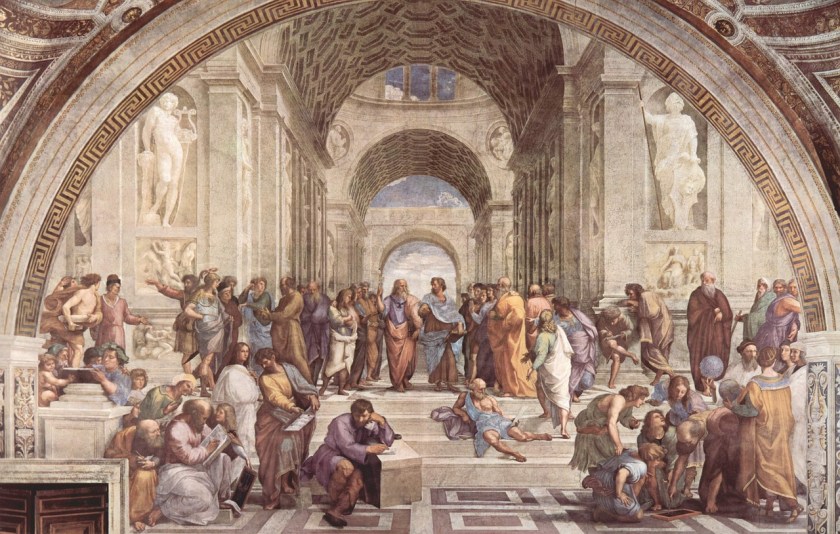
• Plato referred to an objective called “eudaimonia,” “the good life,” which is what humans must strive for in order to be truly happy. Greeks philosophers believed everything has an “arete,” “virtue” or “excellence,” which is what gives it value. For example, a knife’s arete is its ability to cut well. Plato believed a human’s arete was virtue, which encompassed qualities such as wisdom, courage and justice.

• René Descartes said, “The supreme good consists in virtue, which is a firm and constant resolution to use the will well.” In a letter to Princess Elisabeth of Bohemia, Descartes presented his personal definition of “virtue” as being “a firm and constant resolution to carry out whatever reason recommends without being diverted by [one’s] passions or appetites.”

• Immanuel Kant likewise believed that human beings had a higher moral calling he dubbed “Categorical Imperative.” Kant believed that moral laws are universal and are centered around acting in the benefit of mankind.

As can be seen, it has been widely believed through the ages by different philosophers that a “meaningful” or “good” life (I believe the two terms are synonymous) comes from virtue, and therefore seeking to be virtuous will bring meaning to life.  This virtue has included the idea of moral and ethical standards that apply to mankind as a whole, not unique to an individual or a particular society. An example of such a virtue is that of acting for the benefit of mankind even at the expense of one’s personal benefit. This is an indication that virtue is an objective concept which can be studied. Therefore, seeking to understand virtue, where it comes from, what it is, and implementing it into one’s life will bring meaning into one’s life. 

I concede that my argument begs the question of the nature of virtue. The philosophers I have mentioned widely agreed on what encompasses virtue, and that it includes temperance, courage, justice, and wisdom. Plato believed these to be the four cardinal virtues from which all other good qualities stem. While applied in different ways, Plato’s cardinal virtues are held on a basic level in every culture throughout time, as far as can be known in history. This coincides with Kant’s idea that morality can be universally applied. Therefore, one can reasonably believe that there exists some form of objective morality. If this is the case, then it deserves to be studied.

Going a Step Further

A virtuous character is widely defined as, “How you act when nobody’s looking.” The pursuit of “good” behavior alone, the legalistic following of socially proscribed rules and ethics, however, may lead an individual to follow a set of dogma over the well-being of his or her fellow man. This may be seen, for example, when a soldier carries out the commander’s orders, but in doing so, commits atrocities against others. Virtue, then, becomes virtue only in relationship to others. To people of faith, “other” also includes God. The term that Christians would use to summarize the philosophers’ emphasis on virtue as following standards that apply to all people, for the good of people, carried out in relationship with people for their good, is “love.”  Whether or not someone believes in God, most people will find themselves empty and dissatisfied if their sense of virtue doesn’t lead them to form healthy relationships with other human beings. This can be obtained by virtuous living as defined by acting in consideration for others. Therefore virtue brings life meaning insofar as it helps us to have healthy relationships with others.

From a Christian perspective, virtue must first connect a person with God in a loving relationship. God provides them with an objective standard of morality or virtue applicable to all mankind, and provides a model through His own actions. From a theist’s perspective, the belief that there is an omnipotent, benevolent God present in our lives with whom we can have a relationship is of great importance.

Lewis’ philosophies often echoed that of Blaise Pascal. Pascal said, “There is a God-shaped vacuum in the heart of each man which cannot be satisfied by any created thing but only by God the Creator, made known through Jesus Christ.” Pascal had some rather odd theology from a Christian point of view, but from a philosophical standpoint, I agree with his view that a relationship with God (by a conventional Christian definition) is the logical conclusion of what gives life meaning. Further, if someone believes in an afterlife and the immortality of the human soul, then that brings a deeper level of meaningfulness to our relationships in this life.

C.S. Lewis said in Mere Christianity, “If the whole universe has no meaning, we should never have found out that it has no meaning: just as, if there were no light in the universe and therefore no creatures with eyes, we should never know it was dark.” Lewis believed that the meaning of life was in the pursuit of what he called “Joy,” a sense of wonder and fulfillment, which could only be derived from knowing God. In The Weight of Glory, he wrote, “It would seem that Our Lord finds our desires not too strong, but too weak. We are half-hearted creatures, fooling about with drink and sex and ambition when infinite joy is offered us, like an ignorant child who wants to go on making mud pies in a slum because he cannot imagine what is meant by the offer of a holiday at the sea. We are far too easily pleased.”

A little girl once wrote Lewis’ friend and colleague, J.R.R Tolkien a letter asking, “What is the purpose of life?” Tolkien’ answered’s reply was, “So it may be said that the chief purpose of life for any one of us, is to increase according to our capacity our knowledge of God by all the means we have, and to be moved by it to praise and thanks.” His reasoning was that if the Creator of the universe made us with a purpose, knowing Him would reveal to us all meaning.

Delving into the beliefs of these philosophers, it can be deduced that the answer to the question, “What is the meaning of life?” is simply to have a loving relationship with God. Our textbook asks, “Why has God created us, and why us in particular? What does God expect from us? Some people think that God created us as something special, not only ‘in His own image’ but with a mission to accomplish for him here on earth. But why would he do that, if he can do anything?”

The only thing God cannot do (from a logical standpoint) is to force us to love Him, because love cannot, by definition, be forced. He created us with the potential to have a relationship with Him for our mutual joy. We engage in this relationship in much the same way we engage in human relationships. We can talk to God (via prayer), listen to Him (via meditation and the study of scripture), and act out of consideration for Him (which entails acting out of consideration for the other people He created). Christians, specifically, consider a relationship with God to be based on love, which offers a sense of security.

Nihilism

An opposing view would be nihilism; the belief that life is without meaning. If life is without meaning, it’s very strange that we should even question it. For what purpose would the human organism evolve to have a sense of existentialism if our lives had no inherent meaning? Nihilism as a philosophy contradicts human nature, which is strange in and of itself if nihilism is true.

The idea of nihilism can be a comforting idea to fall back on, because it means that the individual can simply choose a purpose for life as it happens to suit the person in the moment. Hedonism is a logical conclusion to come to: if we choose life’s meaning, why not live to indulge our every pleasure?

But imagine a society where everyone took that concept to the extreme. There would be no inherent value to acts of charity, helping others, or even common courtesy. A society of nihilists would be a society of incredibly self-centered and rude or even abusive people, and would quickly become dysfunctional. The only logical reason that a nihilist would not ignore others’ boundaries in order to please self would be fear of some sort of retribution. 

The most emotionally intelligent and well-liked nihilists are those who take pleasure in being kind to others. If the nihilists who derive their meaning from acts of virtue are the most healthy, sociable and fulfilled, isn’t that rather telling? Thus, exploring the inevitable outcome of nihilism brings one back to an inherent sense of virtue.

A Side Note

I would strongly differentiate between what makes a person’s life meaningful and what gives them value as a person. A person who goes out, does remarkable works of charity and has lots of healthy relationships might have a “fuller” life than an antisocial couch-potato, but that does not necessarily mean they are more valuable as a human being. This premise of inherent value comes from my Christian theology and the belief in souls, but others may make the same argument stemming from the human capability for empathy and compassion. Anyone who thinks their value is in how well they put virtue into practice will inevitably end up feeling burned-out and weighed down by guilt, as none of us can live up to our ideals.

Conclusion

These are reasons for concluding that virtue is an objective concept which brings meaning to life as a means of developing healthy relationships, and subsequently, healthier societies. Virtue does not equate a human’s inherent value, but it simply gives a sense of purpose and fulfillment. A relationship with God is the ultimate source of fulfillment.


Sources:

Plato – Dialogue form | Britannica. (2019). In Encyclopædia Britannica. https://www.britannica.com/biography/Plato/Dialogue-form#ref281699

Reporter, E. (2022, January 9). René Descartes: The Meaning of Life — Virtue, Mind & Doubt. https://excellencereporter.com/2022/01/09/rene-descartes-the-meaning-of-life-virtue-mind-doubt/

Noa Naaman-Zauderer. (2015). Virtue. Cambridge University Press EBooks, 747–753. https://doi.org/10.1017/cbo9780511894695.255

Johnson, R., & Cureton, A. (2004, February 23). Kant’s Moral Philosophy. Stanford Encyclopedia of Philosophy; 

Stanford University. https://plato.stanford.edu/entries/kant-moral/

Clarke, D. (2007, August 21). Blaise Pascal (Stanford Encyclopedia of Philosophy). Stanford.edu. Blaise Pascal (Stanford Encyclopedia of Philosophy)Lewis, C. S. (2012). Mere Christianity. William Collins.

Lewis, C. S. (2009). The Weight of Glory.

Pascal, Blaise, 1623-1662. ( 1966). Pascal’s Pensées. Harmondsworth, England :Penguin Books,

Tolkien, J. R. R. (1981). The letters of J.R.R. Tolkien. Houghton Mifflin.

Posted in Church & Ministry Life, Faith and Hope, Love & Relationships, Social Issues

Christians Responding to Religious Trauma

Searching “Religious Trauma” online opens up a slew of heartbreaking stories of people who have been deeply wounded by various churches. When someone is mistreated by a religious community, it can seem evident to born-again Christians that the perpetrating community in question does not actually understand or teach scripture. However, saying something like, “It doesn’t sound like that church believes the gospel or knows Jesus.” Will often be met with, “You say that, but I’ve had bad experiences in all the churches I’ve been to. Christians are just toxic.”

It’s definitely worthwhile to reflect upon how healthy a church’s dynamic is and how they impact their community. However, it’s simply not true that all churches are toxic and dysfunctional. Why, then, does it feel that way to many people?

Churches are supposed to be safe places.

Many, if not most people expect churches to be safe places and it comes as a terrible shock when someone encounters wrong teaching or bad behavior from church members, especially ministers.

Ideally, smaller church congregations would operate as loving families, acknowledging other congregations as being united with them as part of one, global church. This is the dynamic shown in the New Testament with the first churches springing to life. When a church congregation or denomination tolerates sin or bad leadership, Christians may become disillusioned with their community and start having negative associations with anything relating to church.

Churches are made out of people, and people can be terrible.

Everyone is bound to hurt someone else sooner or later in any group of people; whether it be a family, a circle of friends, a workplace, or a church. That’s simply the nature of relationships. Granted, everyone should cut abusive relationships from their life, but it’s impossible to find a circle of people who always act like Jesus.

There are cases when someone is mistreated by a fellow church-goer, and the best course of action would be to simply, “let it go,” or else talk about the issue and seek reconciliation. Instead of that, sometimes a person may choose to hold on to the wrong done to them and allow it to skew their outlook on the church as a whole.

Many churches have genuinely gone off the rails.

It is a sad reality that there are many, many religious communities in existence who have lost sight of the Truth, relying instead on stale tradition or worldly impulses. Such communities are sure to breed immorality such as gossip, shame, self-righteousness, and never-ending conflict. There are churches which are cultic, run authoritatively by narcissistic ministers. These communities shouldn’t come as a surprise to us, however, because the Bible itself warns against them.

The proverbial “wolves in sheep’s clothing” comes from Matthew chapter 7 when Jesus said in verses 15-17, “Beware of false prophets, who come to you in sheep’s clothing but inwardly are ravenous wolves. You will recognize them by their fruits. Are grapes gathered from thornbushes, or figs from thistles?  So, every healthy tree bears good fruit, but the diseased tree bears bad fruit.”

What are examples of good fruit from a church congregation? That would be “The Fruit of the Spirit” – the signs of the Holy Spirit at work.

“But the fruit of the Spirit is love, joy, peace, patience, kindness, goodness, faithfulness, gentleness, self-control; against such things there is no law.”

–Galatians 5:22-23

When people present themselves as Christians and abuse others, it can ruin a person’s perception of God, just like an abusive relative can ruin a person’s perception of family. If a church congregation is not centered on God, we won’t see the fruit of His Spirit. We’ll see a congregation constantly wallowing in everything contrary to the Holy Spirit: fear, hopelessness, anxiety, selfishness, evil, unreliability, harshness and intractability.

A person who has spent many years in an environment such as this may take many more years to un-learn what they have been taught to think God is like. Being immersed in a perverse community which taught them falsehoods about God and His word can be traumatic to a person, and they can only be approached prayerfully and with compassion. We may desire to speak truth to a religiously traumatized person, but we must be careful to do it in the right way with God’s love.

“Then we will no longer be infants, tossed back and forth by the waves, and blown here and there by every wind of teaching and by the cunning and craftiness of people in their deceitful scheming. Instead, speaking the truth in love, we will grow to become in every respect the mature body of him who is the head, that is, Christ. From him the whole body, joined and held together by every supporting ligament, grows and builds itself up in love, as each part does its work.”

–Ephesians 4:14-16

Responding in Love and Compassion

Once when I was a child, I was visiting a farm and another child provoked a rooster. That rooster lashed out at me and left a big gash on my knee. To this day, I still feel apprehensive around roosters. Someone could point out that I only ever had one bad experience with a rooster, but some level of anxiety still remains for me. Telling me that “Not all roosters will attack you,” doesn’t help.

Trauma can cause prejudiced or globalized feelings towards an entire group of people. Someone who grew up in a dysfunctional church may genuinely feel that all churches have unhealthy dynamics. Such a person may not be ready to hear about a healthy Christian community because even the mention of church spikes their anxiety. Telling them “your faith is in people, not in God” won’t take away their pain or negative associations with religious institutions.

Understandably, a person who has been sexually abused may struggle in maintaining a romantic relationship, or they may be apprehensive of sex. However, though countless people have been sexually abused, that doesn’t mean that sex itself is evil. Likewise, though someone may have been abused by someone in a position of spiritual leadership, that doesn’t mean that Christianity is something to fear. But it will certainly take time for an abuse victim to heal.

The greatest tragedy is when a dysfunctional church has skewed someone’s perception of God. If someone has had a traumatic experience in church, it’s not our job to “save” them. That’s the Holy Spirit’s job. Trying to humanly convince a spiritually traumatized person that belief in the gospel leads to joy and freedom from shame will probably be a fruitless endeavor. The kindest things Christians can do for people who have experienced religious trauma is to offer a sympathetic ear and, above all else, pray.

Posted in Faith and Hope

Can Science Prove God’s Existence?

What defines a scientific fact?

“In science, [a fact is] an observation that has been repeatedly confirmed and for all practical purposes is accepted as ‘true.’ Truth in science, however, is never final and what is accepted as a fact today may be modified or even discarded tomorrow.” [1]

In science no fact, theory or law is really, truly set in stone – simply because of human limitations. New data is always changing our understanding of the universe. Things which were impossible to observe a century ago are now easy to observe with today’s technology. In the future there will certainly be more information discovered which will cause us to look back and laugh at today’s scientific teachings. This is why even concepts and ideas which are commonly taken for granted leave room for doubt. This may lead one to wonder if anything is really “scientifically proven,” at least in the vernacular sense.

While I believe it’s fundamental to establish these definitions, it’s only partially relevant to the topic at hand. The question being asked is in essence, “can we know with reasonable certainty that God is real?” I believe it can be argued that both natural and social sciences provide compelling evidence that God is indeed real and present.

The Bible

In a creative writing course I took in college, the teacher gave us students a short-story assignment. One day, our teacher fell sick and didn’t show up to class. He left us a note saying that we could take this opportunity to discuss and compare our writing projects. We sat around the tables, telling each other our stories and giving feedback. “Wouldn’t it be funny,” one of my classmates said, “if all of our short stories were connected? I wonder how many assignments the teacher would read before he noticed that they were all telling one story?”

We all agreed it would be a great prank to play, but our consensus was that none of us were organized enough to pull it off. That in itself is kind of remarkable: a group of students who all live in the same culture, who are of a similar age bracket and who meet each other several times a week (not counting texting and email correspondence) could not write one continuous story together. Yet somehow a collection of writings written in 3 different languages by at least 40 different people living across 3 separate continents over a span of 1,500-1,600 years tells one continuous, coherent story! The people who wrote the Bible were from all different generations, cultures and language groups, but the truth they had to tell was nothing less than divine.

Many have spent their lives trying to find inconsistencies in the Bible, with weak results. Beyond that, the prophecies recorded in the Bible were undeniably specific and have so far come to pass. There is much to be written about this subject, and there exist many books about the Bible’s amazing continuity.

Even the philosopher Jean-Jacques Rousseau observed, “I must confess to you that the majesty of the Scriptures astonishes me; the holiness of the evangelists speaks to my heart and has such striking characters of truth, and is, moreover, so perfectly inimitable, that if it had been the invention of men, the inventors would be greater than the greatest heroes” [3]

Jesus as Physical Evidence

The Bible’s very specific prophecies were fulfilled in the birth, life, death and resurrection of Jesus. He himself proclaimed to be God, capable of forgiving sins, and then performed incredible miracles to prove it.

The life of Jesus and the fact that he fulfilled the prophecies foretold about the promised messiah can be backed up by numerous historical sources. Besides the people who knew Jesus personally writing about Him in the gospels, He was also written about by renowned historians Josephus and Tacitus among other contemporaries. In coming to physically live with humankind, God made His presence and intentions towards humanity clear.

The Universe

The universe didn’t always exist. Popular science says it had a beginning. Something must have been there before the universe existed in order to “get it going.” That at first may seem like a logical fallacy, or at best circular reasoning since the thought is “It defies physics for the universe to have always existed so therefore something must have existed before existence itself.”

We often hear children asking, “Who created God?” and that’s a perfectly reasonable question to ask. However, God is defined as omnipresent and always existing. That’s who He is. It’s an incredibly abstract concept for a human being to grasp, and virtually impossible to imagine something which didn’t have a beginning. I don’t think it should be at all surprising, however, that an infinite God would be beyond the imagination of finite human minds.

Life as we know it is so perfectly fine-tuned and can only exist in very precise conditions. It’s reasonable to believe that whatever created such a beautiful and complex world must be an intelligent “who” rather than a “what.” It’s been theorized that the multiverse is churning out infinite dimensions and that we exist in one that’s been lucky enough to support life. That doesn’t answer the question of who or what started the multiverse, however.

Furthermore, while the following point doesn’t prove God’s existence, it’s significant enough to note that the hypothetical idea of a multiverse existing is complex. It’s a theory which can’t be tested or observed and is therefore no less scientific than the belief that God created life.

Conclusion

While it’s not proof of God, it’s highly compelling that virtually all cultures from the beginning of recorded history believed in some sort of Higher Power. It’s only a minority which has existed in a short period of world history who have taken a naturalistic worldview. Most of humanity has taken the existence of God for granted, having a sense that existence itself must have been started by something divine. From an anthropological standpoint it could be seen as a bit out-of-the-ordinary that anyone would even question God’s existence.

There is yet even more evidence for the existence of God which I haven’t even touched upon. The evidence that God is real is quite solid and, one might say, scientific. However, in some ways it doesn’t really matter if science can prove the existence of God.

Human beings seldom base their beliefs on objective evidence. People have a very strong tendency to come to a conclusion and then find evidence to back it up. We can see this in daily life when a girl insistently gives reasons why her abusive boyfriend “really isn’t such a bad guy” because she’s decided to be with him. A person who wants to believe the earth is flat will find reasons to believe the earth is flat. Likewise, a person who wants to believe there is no God will find reasons to believe that He doesn’t exist.

God, however, in His grace is constantly and tenaciously reaching out to us. He leaves us evidence of his presence everywhere for us to find. He’s persistently calling to us, offering us a relationship so that we know Him and love Him, and we don’t need to do anything except believe and respond.

Casserley explains, “The gospel provides that knowledge of ultimate truth which men have sought through philosophy in vain, inevitably in vain, because it is essential to the very nature of God that He cannot be discovered by searching and probing of human minds, that He can only be known if He first takes the initiative and reveals himself.” [4]

Sources


[1] Definitions of Fact, Theory, and Law in Scientific Work

[2] What’s the Difference Between a Fact, a Hypothesis, a Theory, and a Law in Science?

[3] Frank Mead, Encyclopedia of Religious Quotations, p. 32

[4] J.V. Langmead Casserley, The Christian in Philosophy, New York, Charles Scribner’s Sons, 1951, p. 21

How do you know God exists?

Prove to Me That God Exists: Getting Clear on Atheism, Agnosticism, and a Few Other Matters

Posted in Faith and Hope, Life as a Foreigner

Something Extraordinary: the Juxtapositions of Christian Life

“By this all people will know that you are my disciples, if you have love for one another.”

-John 13:35 (ESV)

In the second or third century a significant letter (also called an epistle) was written to some unknown person named “Diognetus.” The author of the epistle remains a mystery lost to time, but he called himself “Mathetes,” which simply means, “disciple” in Greek.

Diognetus apparently had questions about Christianity, and Mathetes was happy to address them. Mathetes felt that those people who still clung to the Law for salvation were “foolish” and “superstitious,” echoing the letters of Paul. Below is an excerpt from “The Epistle to Diognetus” in which Mathetes lists the strange juxtapositions which come with living a Christian life:


“Christians are indistinguishable from other men either by nationality, language or customs. They do not inhabit separate cities of their own, or speak a strange dialect, or follow some outlandish way of life. Their teaching is not based upon reveries inspired by the curiosity of men. Unlike some other people, they champion no purely human doctrine. With regard to dress, food and manner of life in general, they follow the customs of whatever city they happen to be living in, whether it is Greek or foreign. 

And yet there is something extraordinary about their lives.

-They live in their own countries as though they were only passing through.

-They play their full role as citizens, but labor under all the disabilities of aliens.

-Any country can be their homeland, but for them their homeland, wherever it may be, is a foreign country.

-Like others, they marry and have children, but they do not expose them.

-They share their meals, but not their wives.  

-They live in the flesh, but they are not governed by the desires of the flesh.

-They pass their days upon earth, but they are citizens of heaven.

-Obedient to the laws, they yet live on a level that transcends the law.

-Christians love all men, but all men persecute them.

-Condemned because they are not understood, they are put to death, but raised to life again.

-They live in poverty, but enrich many; they are totally destitute, but possess an abundance of everything.

-They suffer dishonor, but that is their glory.

-They are defamed, but vindicated.

A blessing is their answer to abuse, deference their response to insult. For the good they do they receive the punishment of malefactors, but even then they, rejoice, as though receiving the gift of life. They are attacked by the Jews as aliens, they are persecuted by the Greeks, yet no one can explain the reason for this hatred. 

To speak in general terms, we may say that the Christian is to the world what the soul is to the body. As the soul is present in every part of the body, while remaining distinct from it, so Christians are found in all the cities of the world, but cannot be identified with the world. As the visible body contains the invisible soul, so Christians are seen living in the world, but their religious life remains unseen. The body hates the soul and wars against it, not because of any injury the soul has done it, but because of the restriction the soul places on its pleasures. Similarly, the world hates the Christians, not because they have done it any wrong, but because they are opposed to its enjoyments. 

Christians love those who hate them just as the soul loves the body and all its members despite the body’s hatred. It is by the soul, enclosed within the body, that the body is held together, and similarly, it is by the Christians, detained in the world as in a prison, that the world is held together. The soul, though immortal, has a mortal dwelling place; and Christians also live for a time amidst perishable things, while awaiting the freedom from change and decay that will be theirs in heaven. As the soul benefits from the deprivation of food and drink, so Christians flourish under persecution. Such is the Christian’s lofty and divinely appointed function, from which he is not permitted to excuse himself.”


[Source: From a letter to Diognetus (Nn. 5-6; Funk, 397-401)]


And so Mathetes viewed Christians as sojourners in this world, just as the Bible said we would be.

What I have observed is that bitterness towards Christianity as a whole sprouts up within a person’s heart when they see an individual who claims to be Christian yet is immensely selfish and unkind to those around them. As Mathetes suggested and Jesus Himself said, the main, defining, recognizable qualities of a Christian are their love and selflessness. When a Christian is worldly and behaves badly towards others, it’s easy for others to become disgusted by their hypocrisy and discredit Christianity as a whole.

Love, however, is a fruit of the Spirit, not a fruit of humanity. A person who calls themself a Christian yet doesn’t act in love may not actually understand the gospel. They may not, in fact, really be a Christian as the Bible defines it.

Beyond that however, Christianity is not a lifestyle or a list of things people do. Christianity is a relationship with God. My son might display rude behavior despite my warning him not to. That won’t change the fact that he’s my son, I’m his mother and I love him very much. He might, however, lose friends because of his behavior!

Growing up in church, I was surrounded by many kind-hearted people, but even the best of them could be downright moronic at times. I myself have many regrets because of times I hurt other people, and I hope they’ll forgive me. This doesn’t change the fact that God Himself, our Father, is good. There are times when I forget where my true citizenship is and I disregard the needs of others. I understand that every person who claims Christianity “misbehaves” at times, for one reason or another.

But God is always there, He is good, and he’s ready to make us the world’s “soul” as Mathetes said. It’s the Holy Spirit which compels us to be the good in the world. That’s what makes Christians stand out from the crowd.

Posted in Faith and Hope, Love & Relationships

A Ticking Clock, Death and the Supernatural

“And I heard a voice from heaven saying,

‘Write this: Blessed are the dead who die in the Lord from now on.’

‘Blessed indeed,’ says the Spirit, 

‘that they may rest from their labors, for their deeds follow them!'”

–Revelation 14:13

My last surviving grandparent, my maternal grandfather, passed nearly three weeks ago.

He’s always kept a mantel clock on his roll top desk which he had inherited from his mother, and which now I have inherited. It’s one of those old ones which has a key to wind it up, but it had not been working at all for a very long time. A couple days after his passing, I was in my grandpa’s study with my mom. It was then that I suddenly noticed the clock ticking.

I said to my mom, “Oh, did you fix the clock?” but even as I asked the question, my gaze fell upon the key, still dusty and unmoved from the last place my grandpa had left it.

Mom stood still for a moment and heard the ticking too. “I didn’t fix it,” my mom answered, “Maybe your dad or your sister did.”

When I asked my sister about it later, she looked surprised. My dad came out of grandpa’s office and commented, “That clock ticks and it even chimes now too!”

“But I didn’t touch it, and no one else did either!” I said with bewilderment.

My dad smiled and shrugged, “It’s a Christmas miracle…in July.”

I googled what could cause an old clock to start working again inexplicably. Some answers vaguely alluded to someone bumping it, which would not account for all the times it had been bumped by my grandpa sitting at his desk. However, I was interested to discover that many people had the same experience of broken clocks miraculously working again just before or just after a death in the household. The most common answer to my google search was something supernatural, weirdly enough.

I don’t think of myself as superstitious, and as a Christian I don’t believe in ghosts. However when I saw that the clock was working again I felt a spark of joy. I had wanted to have the clock fixed anyway and I knew in my heart that this was a gift from God.

My mom said, “It’s God reminding us that life doesn’t stop with death. The clock keeps ticking into eternity.”

When I think of my grandparents, I think of Romans 10:14-15:

How then will they call on him in whom they have not believed? And how are they to believe in him of whom they have never heard? And how are they to hear without someone preaching? And how are they to preach unless they are sent? As it is written, “How beautiful are the feet of those who preach the good news!”

My grandma preceded grandpa into heaven ten months prior to his death. As a couple they dedicated their lives to humanitarian efforts and had served with Wycliffe Bible Translators for forty years. Their deepest passion was for sharing the gospel and making sure everyone had access to scripture in their own native language. I’ll be forever grateful to my grandparents for teaching me to respect and understand other cultures. They will always inspire to be brave, resourceful, resilient and adventurous.

According to my mother, however, my grandparents’ main foible was a subconscious belief that their value was tied into how much they could do for God. They had a strong tendency to be so engrossed in ministry that they forgot to prioritize relationships and the individual needs of their children. In that way they were classic “people of their time.” It was only in the final years of my grandfather’s life that he came to understand in his heart that his value is inherent: God loves him just for who he is.

Flawed though they were, they paved the way for the next generation of Christians to utilize their gifts and abilities to further the gospel and spread the message of hope. They empowered and equipped believers from all different ethnic groups all around the world. Although they were imperfect parents, they raised my wonderful mother who God has also used powerfully. Amith and grandpa, despite both the generational and cultural gaps, were very close. I saw the beauty of the love of Jesus drawing them together as members of one family in Christ. Both my grandparents loved us very much and were always very supportive of Amith and me in our endeavors. I know Amith and I will cherish their memory in our hearts as long as we live.

Like the little boy who brought his tiny fish and loaves of bread, my grandparents brought their workaholic, emotionally-constipated selves and through them God cultivated love in abundance. I find joy and comfort in knowing that I don’t have to be perfect for God to work through me in amazing ways.

Grandpa’s last Bible study series was on Revelations, which seems very appropriate. Like Revelations 14:13 says, I love to think of my grandparents resting from their labors and enjoying the presence of God. Their good deeds will follow them, and impact generations long after they’ve been long forgotten. The clock will keep ticking, and the family of God will flourish.

“Truly, truly, I say to you, whoever hears my word and believes him who sent me has eternal life. He does not come into judgment, but has passed from death to life.”

–John 5:24

Posted in Faith and Hope

Reconstructing Faith

Unless the Lord builds the house,
    those who build it labor in vain.
Unless the Lord watches over the city,
    the watchman stays awake in vain.

-Psalm 127:1

As children my sister and I loved Lego sets and played with them all the time. It was exciting getting a new kit and working together to assemble it. We might have assembled them incorrectly at times, but we could always pull the bricks apart and consult the instruction guide. Most of the sets were virtually impossible to assemble without following the instructions very, very carefully.

“I’m decontrstructing my faith,” is a phrase which has become fairly cliche. It seems to be a process many are going through right now. It really is critical for everyone to examine each individual “brick” in the structure of their Christian faith structure, taking it apart if something is incorrectly placed.

If you find the need to deconstruct your faith, that can be a positive thing. However it’s also necessary to consult the “guide book” to make sure it’s properly reconstructed.

When a person realizes that their faith is causing problems (i.e. causing them anxiety or hurting their relationships with others) they may make the decision to leave Christianity altogether. It needs to be taken into consideration that they may have internalized beliefs which are simply not true.

Though I may have chortled, I still found this meme rather painful. It was intended to be funny, but it hit a little too close to home for me:

The tragic irony is that these the things mentioned in this image which many have found so burdensome are things which the Bible SPECIFICALLY tells us not to worry about.

I know I talk about this a lot, but there are so many of my peers who grew up in religious families who now carry heavy emotional baggage, and many of them think that’s all there is to Christianity. Many parents have been so worried about their children getting into trouble that they’ve expended all their energy into teaching them rules and have never gotten around to teaching them about grace. (Maybe the parents themselves didn’t understand the concept of grace.)

The Bible says our salvation is 100% secure if we believe Jesus paid for our sins. (John 10:28, 2 Cor 5:17, Heb 6:18-20) He really loves us, wants us to succeed and has already forgiven our sins before we’ve even so much as thought about them.

This life we have is temporary and we have eternity to look forward to. We’re not supposed to fear our circumstances, demonic stuff or even mistakes we may make because God truly loves us and is always there for us, like a faithful friend or nurturing parent.

————————————————————————

Romans 8:31-39

“What, then, shall we say in response to these things? If God is for us, who can be against us? He who did not spare his own Son, but gave him up for us all—how will he not also, along with him, graciously give us all things? Who will bring any charge against those whom God has chosen? It is God who justifies. Who then is the one who condemns? No one. Christ Jesus who died—more than that, who was raised to life—is at the right hand of God and is also interceding for us. Who shall separate us from the love of Christ? Shall trouble or hardship or persecution or famine or nakedness or danger or sword? As it is written:

‘For your sake we face death all day long;

    we are considered as sheep to be slaughtered.’

No, in all these things we are more than conquerors through him who loved us. For I am convinced that neither death nor life, neither angels nor demons, neither the present nor the future, nor any powers, neither height nor depth, nor anything else in all creation, will be able to separate us from the love of God that is in Christ Jesus our Lord.”

————————————————————————

Returning to the Lego metaphor: just because a set doesn’t look right doesn’t mean the model kit is faulty. When I build a Lego set I may very easily connect pieces incorrectly, or perhaps I lost some pieces along the way.

I would encourage any believer feeling discouraged or hopeless to examine the scripture and ask the Holy Spirit to reveal to them anything they may have missed. All of us are on a spiritual journey and none of us will ever stop learning.

If any of you lacks wisdom, let him ask God, who gives generously to all without reproach, and it will be given him.

-James 1:5

Posted in Faith and Hope

Comfort For Those Who Live in Fear of Disobeying God

“In this is love, not that we have loved God but that he loved us and sent his Son to be the propitiation for our sins.”

–1 John 4:10

I want to follow God. I know the ultimate outcome will be for the best when we obey Him. One of my best friends once confided in me that she was actually anxious that she would disobey God and fall away from Him. At that time, I also had the same fear deep down inside. I’ve always known that my salvation is secure, but I still feared the consequences of my own mistakes.

Here are four important truths I have learned since then:

1. God wants to help us obey Him.

This is a fact the New Testament talks about a lot. When Jesus sent believers the Holy Spirit, He sent us someone to help us follow Him.

“For if you live according to the flesh you will die, but if by the Spirit you put to death the deeds of the body, you will live.”  –Romans 8:13

“Walk by the Spirit, and you will not gratify the desires of the flesh.” –Galations 5:16

God transforms us to be like Him, and in doing so, be begin to desire the same things as God.


2. Even if we don’t listen to Him, God is still in control.

While we’ll face consequences when we disobey God, He is still in control. If my son disobeys me by playing with a candle, he’ll certainly get burned. However, I’m not going to reject him as my child: as a matter of fact, I’ll apply cold water and aloe to his burn. No matter what he does, even if he grows up to make huge mistakes in life, I’ll still be his mother. Even if I make terrible mistakes in life, God is still my father, and that’s what my hope is founded in.


3. God’s forgiveness is complete.

Our sins disappoint us, but they don’t disappoint God.

“For I will be merciful toward their iniquities,
    and I will remember their sins no more.” –Hebrews 8:12

“For our sake he made him to be sin who knew no sin, so that in him we might become the righteousness of God.” –2 Corinthians 5:21

On the cross Jesus saw all of the sins we would ever commit and he took all of the punishment we deserved on Himself.


4. God’s love is unconditional.

My mother told me when she was a child, songs were sung in her church which confused her idea of who God is. I found one of them:

“Oh, be careful, little eyes, what you see,
Oh, be careful, little eyes, what you see.
There’s a Father up above looking down in love,
So, be careful, little eyes, what you see.”

This song painted a picture for my mom and many of her peers of a harsh old father who is waiting to reward us if we’re good and punish us if we’re bad.

The Bible, however, tells us of Someone who loves us faithfully and unconditionally. He gave us everything in Him and died so that we could have a relationship with Him. Having a relationship with God is in itself the greatest blessing a person could have. Instead of fearing that we might disobey Him, He wants us to find peace and  security in Him. 

This Christmas season, may we remember why Jesus came into this world: to make a way to have a relationship with Him.


There is no fear in love, but perfect love casts out fear. For fear has to do with punishment, and whoever fears has not been perfected in love.

–1 John 4:18

Posted in Faith and Hope, Love & Relationships

The Patience of Toddlers

My mom and I were out shopping for Christmas decoration craft supplies. On the way home we stopped at the store where my husband works. When we parked outside, my son recognized where we were and became excited.

“Daddy!” Asaph exclaimed gleefully.

But when we entered the store we were told by one of his coworkers that my husband had gotten off early. We shrugged and headed back to the car.

“Daddy?!” Asaph protested.

“Daddy’s at home. We’ll see him in a few minutes,” I explained.

As my mom opened the car door, Asaph clung to it with his chubby, yet surprisingly strong little fists.

“Daddy! DADDY!!!” He wailed.

“We’re going home to see daddy! We’ll see him soon!” I explained again as I pried his tiny toddler fingers off the door and strapped him to his car seat.

“DADDY!!! DADDY!!! DADDYYYYYY!!!” He screamed on the ten-minute drive home as though his heart was breaking.

Needless to say, a few minutes later he was overjoyed to see for himself that his father was indeed still alive!


It was so sad yet so funny to see Asaph so upset over nothing. He understands a lot, but apparently he couldn’t understand that he would be with his daddy in just a little while. I felt that there were metaphors to be drawn from my son’s tears. It made me more self-aware: this must be how we look to God when we’re waiting for an answer to prayer.

Patience is a very important fruit of the Spirit. When love is described in 1 Corinthians 13, the first verse says, “Love is patient.” All of us, deep down, are just tantruming toddlers. Who am I kidding: it may not even be all that deep down. Patience is not something we can create in ourselves; it takes the Holy Spirit to help us. If we ask the Holy Spirit, He’ll be faithful to make us patient.

I tried explaining to Asaph again and again that his daddy was at home and he could be with him very soon. Yet Asaph could not understand. Likewise, we may panic when we can’t understand what God is doing. Uncertainty is terrifying. We must trust in our Heavenly Father and have faith in Him. Just like the man in Mark chapter 9, we can cry out to Jesus and ask, “Help my unbelief!” The Holy Spirit wants to help us trust in Him.

“but they who wait for the Lord shall renew their strength;
    they shall mount up with wings like eagles;
they shall run and not be weary;
    they shall walk and not faint”

–Isaiah 40:31

Posted in Faith and Hope

Creativity is Divine

“So God created man in his own image, in the image of God he created him; male and female he created them.”
‭‭-Genesis‬ ‭1:27‬

As my son grows from a baby into a toddler I find him becoming progressively less clingy, allowing me short periods of time to connect with the things I enjoy. In this strange quarentine time I’ve been exploring hobbies I enjoyed when I was younger, such as paper crafts, as well as trying new things like metal stamping and making pin-back buttons. Reading and writing are things I continually struggle to get back into as I find they take longer periods of uninterrupted focus than my son allows.

I feel my soul refreshed as I make art. When I’m able to sell or give away something I make and I see delight on another person’s face, I’m filled with a sense of joy that I could bring a little sunshine into someone else’s day. Maybe God feels this same way when we appreciate the beauty of nature.

An incident which inspired me was when I painted rocks to leave in a painted rock exchange box at my favorite coffee shop. As I sat sipping my coffee, I saw a little girl go up to the box. She picked out one I had painted which had a Bible verse on it (1 John 4:7, if I recall). The little girl picked it up and exclaimed, “Mommy, this is the best one!”

The girl’s mother wore a dark t-shirt which was covered in pentagrams and goat skulls. She whispered something to her daughter who then put the rock back. It struck me how presenting scripture through art left an impression, however small, on this little girl whose mother was evidently disinterested in Christian things.

I understand now that a creative outlet is a inbuilt need every person has. Everyone gravitates to differant outlets, but creativity is a reflection of God’s nature in us. Art, crafts, writing, building, engineering and cooking are just a few ways in which different people express their creativity.

“Whatever you do, work heartily, as for the Lord and not for men,”
‭‭-Colossians‬ ‭3:23‬ ‭ESV‬‬

And so I would encourage my friends and readers to prioritize time for being creative and discovering the personal creative gift which God has given you. And, most importantly, use your God-given creativity to worship Him!

Posted in Faith and Hope

When Life Feels Boring and Empty

“What does man gain by all the toil
    at which he toils under the sun?
A generation goes, and a generation comes,
    but the earth remains forever.”
“All things are full of weariness;
    a man cannot utter it;
the eye is not satisfied with seeing,
    nor the ear filled with hearing.
What has been is what will be,
    and what has been done is what will be done,
    and there is nothing new under the sun.
Is there a thing of which it is said,
    ‘See, this is new’?
It has been already
    in the ages before us.
There is no remembrance of former things,
    nor will there be any remembrance
of later things yet to be
    among those who come after.”
–Eccesiastes 1:3-4, 8-11

Right now, towards the end of spring 2020, a sense of restlessness has come over many as all around the world people are quarantined at home. I’m no exception and neither is my family. Something I’ve learned, however, is that much of life consists of long periods of tedium. Very soon this quarantine will be over and we’ll go back to our churches, jobs, schools and social gatherings. Then what?
If you’re lucky, work will be fulfilling and exciting at times, but there will inevitably be long seasons in life were it feels tedious. Through much of life excitement and happiness is like a wild rabbit running before a child, always just out of their grasp.
Henry David Thoreau famously said,
“The mass of men lead lives of quiet desperation. What is called resignation is confirmed desperation. From the desperate city you go into the desperate country, and have to console yourself with the bravery of minks and muskrats. A stereotyped but unconscious despair is concealed even under what are called the games and amusements of mankind.”
Despite our best efforts, life will feel empty and often boring for periods of time, quarantine or no quarantine. The Devil would like for us to despair at this prospect. But the truth is that God Himself can prevent a Christian’s life from being boring. Following God is an adventure in and of itself. Here are some helpful things to remember:
  • God is infinite. There’s always something to learn about Him. The wonderful thing about God’s omnipotence is that since He’s endless, we can spend eternity learning new things about Him.
Blessed are those who keep his testimonies,
    who seek him with their whole heart,
–Psalm 119:2
  • We can always talk to God. God listens and cares about everything we experience because He loves us. Just like a good parent will be interested in everything their child has to say, God will listen to us. When you’re bored with life, you can talk to God about it and ask Him to show you what He wants you to do in this season of life.
  • God reminds us to be thankful for what He’s given us. When life feels boring, it’s easy to develop a negative outlook. Paying attention to the blessings we’re surrounded by and thanking God for them will help us to keep from being bored. If nothing else, we have a relationship with God to be joyful about!
Dependence on worldly comforts and our life’s situation will being boredom, tedium and eventually hopelessness. Dependence on God and gratefulness for Him will bring joy into a Christian’s life. This is what Solomon discovered the hard way as we see in the book of Ecclesiastes. We can learn from His mistakes and find our joy in the Lord. Right now, if you’re feeling down, depressed and bored, it may be that God wants to draw you closer to Him, which is the greatest and most exciting adventure of all!

Rejoice always, pray without ceasing, give thanks in all circumstances; for this is the will of God in Christ Jesus for you.

–Thessalonians 5:16-18