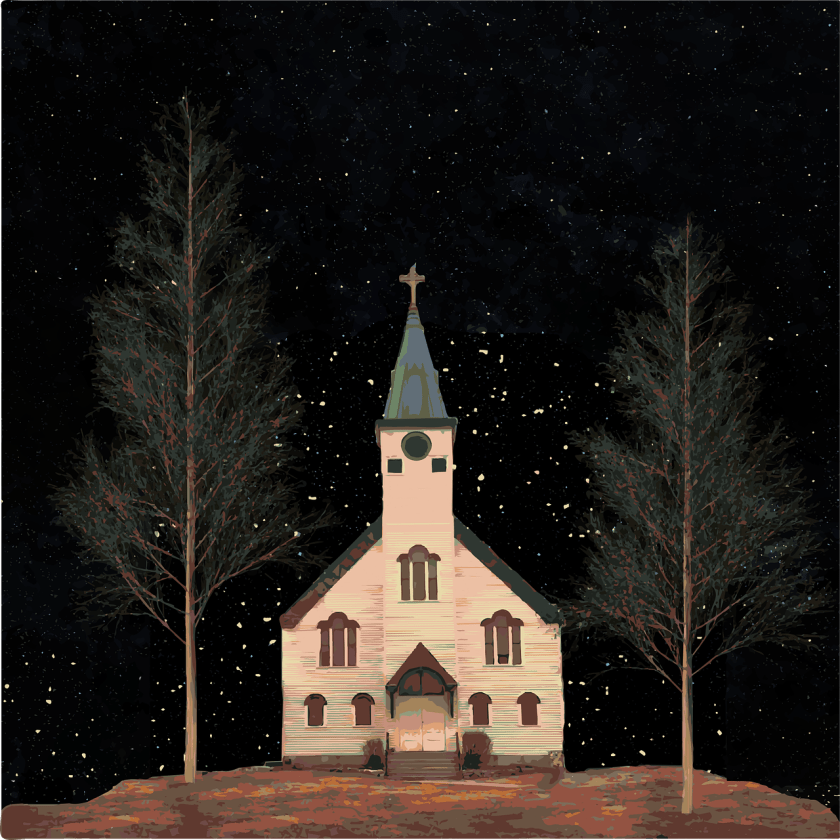
Many evangelical Christians feel discouraged at the decreasing number of church attendees, not only in the United States, but in other countries as well. An article from Pew Research which detailed “Striking Findings from 2021” talked about a rise in the number of religiously unaffiliated Americans:
“About three-in-ten Americans are religiously unaffiliated, a 10 percentage point rise from a decade ago, according to a survey conducted between May and August. Currently, 29% of U.S. adults are religious “nones” – those who describe themselves as atheists, agnostics or “nothing in particular.” By comparison, 16% described themselves this way when the Center first asked the question in 2007.
Christians continue to make up a majority of the U.S. population (63%), but their share is 12 points lower in 2021 than it was in 2011. Christians now outnumber religious “nones” by a ratio of a little more than two-to-one. In 2007, when the Center began asking its current question about religious identity, Christians outnumbered “nones” by almost five-to-one (78% vs. 16%).” [1]
What do these statistics really mean for Christians?
If Christians are defined as people who believe the gospel of Jesus and follow the teaching of the Bible, how much has their number actually dropped? In previous generations of Americans, it was considered “good” to go to church and believe in God. Their sense of ethics would tend to adhere to traditional Judeo-Christian values. They would call themselves “Christians” because they came from a “Christian” community.
But how many of these traditional church-goers could actually explain their beliefs? How many lived out their lives according to Biblical principles and desired to seek out God’s will in their day-to-day lives? How many understood the concept of a personal relationship with God? How many were actually saved?
It’s difficult to judge if the number of born-again Christians has decreased or not because one can call themself a Christian without actually having been “born again.” Most European countries have been considered “Christian nations” for many centuries, and yet were oppressed by tyrants and cruel clergymen. Before the Civil War in the United States, most slave holders would have claimed to be Christians. Even Adolf Hitler said, “Besides that, I believe one thing: there is a Lord God! And this Lord God creates the peoples.” [2]
There’s no statistic which can tell us with certainty how many truly born-again Christians live in a nation. A positive way to look at declining church attendance, however, is that we as Christians can see perhaps with a little more clarity who around us is ignorant of the gospel and reach out to them. Those who in the past have masqueraded as Christians will discard their pretense and either seek genuine answers or show no interest in knowing Jesus at all.
I would encourage my brothers and sisters in Christ to not be disheartened by empty pews, but rather look at their families, friends and neighbors and be the church towards them rather than fret about convincing them to go to service with you. This is what will have the most profound and lasting impact anyway.
“Let the word of Christ dwell in you richly, teaching and admonishing one another in all wisdom, singing psalms and hymns and spiritual songs, with thankfulness in your hearts to God” — Colossians 3:16
Sources:
[1] https://www.pewresearch.org/fact-tank/2021/12/17/striking-findings-from-2021/
[2] Hitler: speeches and proclamations, 1932-1945 : the chronicle of a dictatorship (ed. 1990)

 Anna Sojourning